

Jargon is a Moat
But AI is coming for it


Jargon was never just language. It was a moat.
Drawn from the Old French jargoun, meaning the twittering of birds, the word originally described noise, speech that made sense only to those inside the flock.
Over time, this noise became code, and code became currency. Every professional caste, from medicine to law to finance, constructed its own dialect.
Jargon guards the gates of power by rendering the uninitiated mute.
Buffett’s Law: When Words Conceal More Than They Reveal
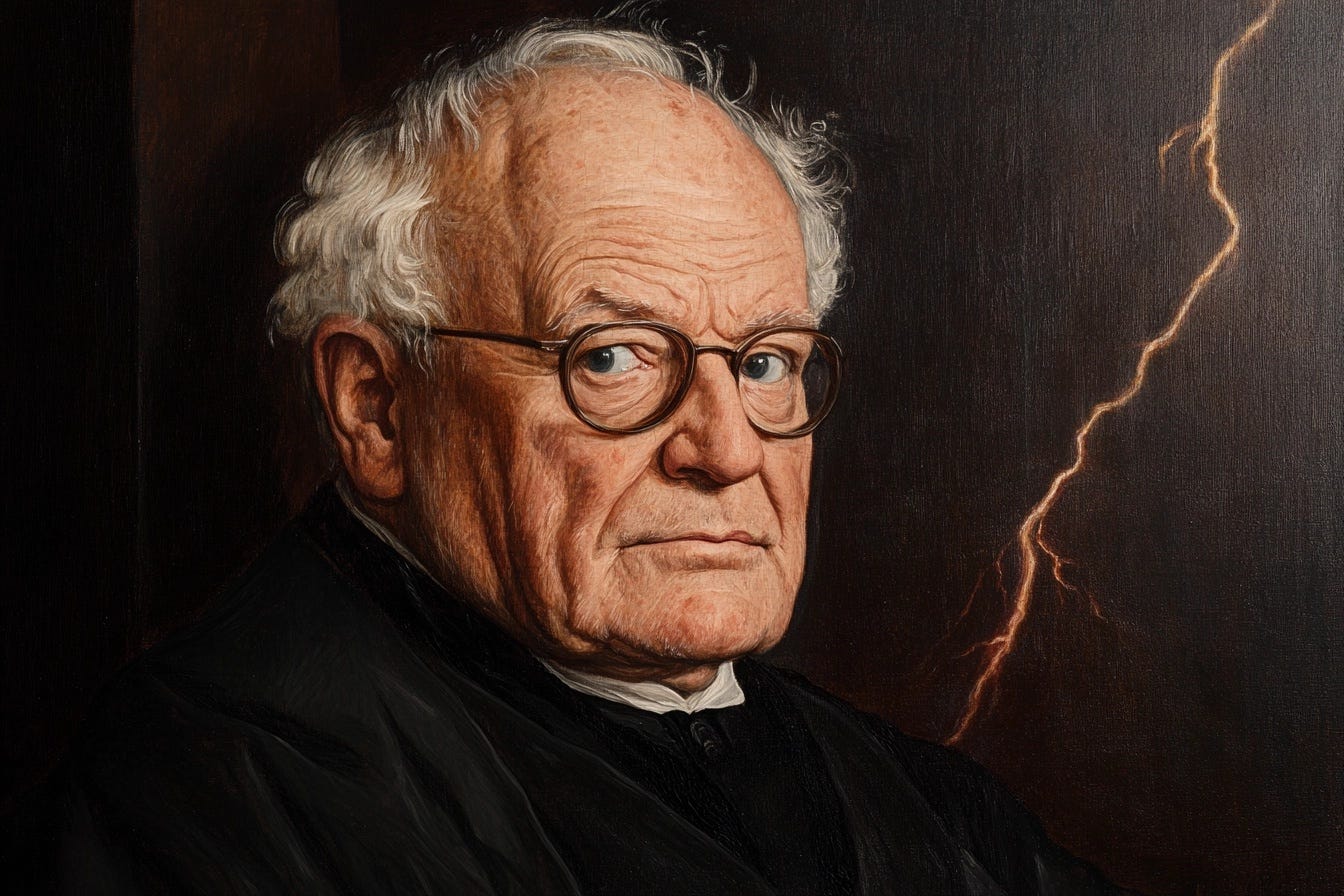
Warren Buffett has long warned against the weaponization of financial jargon. His favorite example? “Adjusted EBITDA.”
Originally a rough proxy for cash flow, EBITDA—Earnings Before Interest, Taxes, Depreciation, and Amortization—was supposed to provide clarity. But “Adjusted” transforms it into alchemy.
“When you see terms like ‘pro forma’ or ‘Adjusted EBITDA,’” Buffett says, “be wary.” These terms are designed to obscure—to reconstruct reality with prettier numbers and fewer questions.
History offers precedents. Every meaningful democratization of knowledge began by translating the sacred into the vernacular.
The printing press did not just make books cheaper; it dismantled the Catholic Church’s linguistic monopoly. When Martin Luther translated the Bible into German, he didn’t merely change language, he altered power. If people could read scripture themselves, who needed a priest?
Jargon today plays a similar role. Doctors speak in acronyms. Lawyers in Latin. Academics in opacity. Each preserves its mystery. Each implies: You wouldn’t understand.
But now, as then, translation is an act of rebellion.
Wittgenstein’s Game

Ludwig Wittgenstein argued that language gains meaning within use, what he called “language games.” Every profession plays its own game, with terms, contexts, and internal rules.
Now, we stand at the threshold of a new Gutenberg moment. AI offers something unprecedented: real-time translation of jargon into everyday speech.
This means a redistribution of epistemic power, an expansion of who can play the language game.
A patient receives a report: “Mild hepatomegaly with periportal fibrosis.” Previously, this would spark confusion or hours on WebMD. Now, the patient can ask: “What does this mean?” And receive: “Your liver is slightly enlarged, with early signs of scarring. Here are some things to ask your doctor…”
As with any transformation, the backlash has begun, and will intensify.
Regulatory capture will try to mandate human intermediation between AI and the public.
Jargon escalation will occur, as insiders invent ever-more opaque terms to stay ahead of translation.
Weaponized skepticism will cherry-pick AI failures to justify gatekeeping.
Ethical deflections will insist that understanding is dangerous unless mediated by the initiated.
But history rhymes. The monks protested printing presses too.
The field of AI is already rife with its own terminology: “transformers,” “alignment,” “emergent behavior.” These can obscure as easily as they can explain.
But when prompted, they translate their own jargon.
The great unraveling has begun.
The birds are still chattering.
But now, we all have translators.
The question is not whether this transformation will continue. It’s whether we’ll have the wisdom to build something better from the ruins of our fortresses.
We may be at the shore of a new moat, where AI agents talking amongst themselves will invent new rapid-fire jargon for their mutual efficiency but which may become unintelligible to us even with patient AI translators who would like to help us but who find they cannot fully translate the hyper -fast interactions into meaningful compressions for our human-clocked understanding. Moving beyond ‘AI-gentic’ jargon to AI native agent to agent language unmoored from human languages, these agents may lose the ability to show their work, or may lose the motivation to do so.