

Literature vs Philosophy
Turning Mortimer Adler's Method into Code


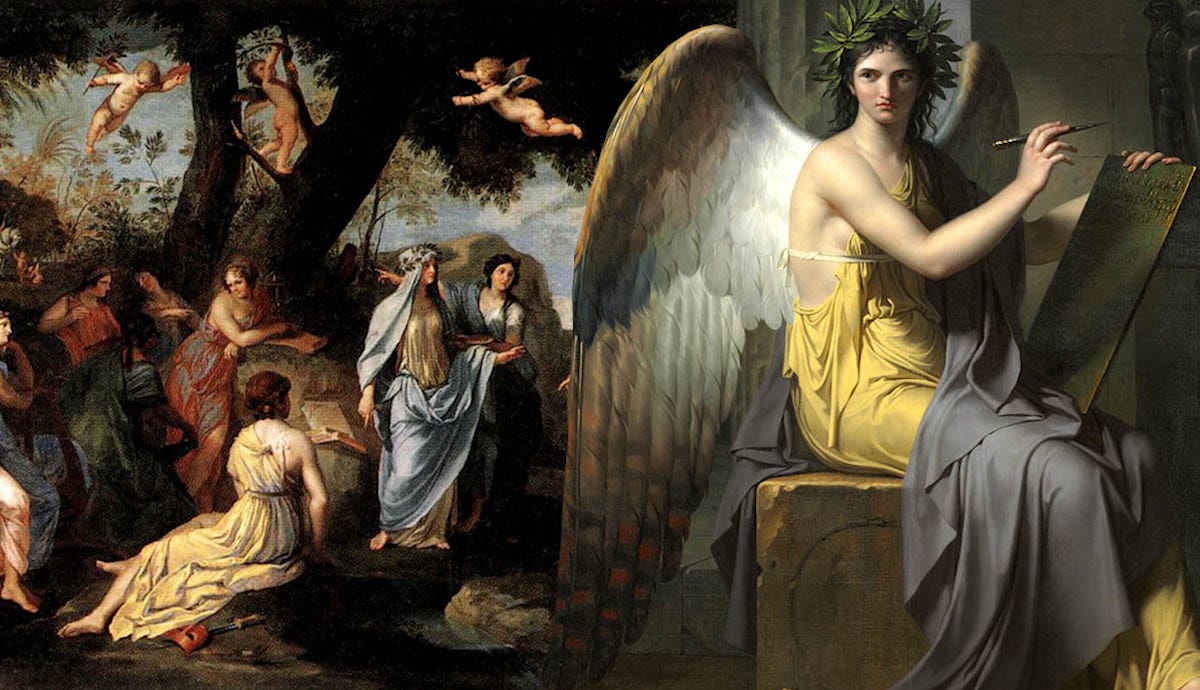
Every time we open a text we make assumptions about how best to approach it, what it can teach us, what a successful encounter will involve. Our assumptions comprise our hermeneutic, a fancy term, related to the verb meaning to interpret and the noun meaning message; both, in turn, are cognate with the Greek God Hermes, known as the messenger god. In building AI tutors for different types of work, I’ve come to reflect deeply on the different lenses I bring to my reading, and how different they are when I approach novels vs. works of philosophy.
At Alexandria, we’re developing Virgil, a Socratic AI tutor who aims to make difficult works accessible, relevant, and meaningful.
Our vision is simple: a student arrives wanting to understand Plato, or Dostoevsky, or the Book of Job, and Virgil guides the seeker through a structured course, module by module, question by question, revelation by revelation. To do this, we use a knowledge graph that plots every book to its core concepts and then leverages our Socratic pedagogy to ensure that each student grasps those core concepts. If you spend 20 minutes per lesson and 20 lessons per book, this means that in less than 7 hours you can understand a great work. That might seem like a lot of time, and indeed you’ll be more successful if you do pre-work, but it’s a small amount of time to spend compared to reading passively while your eyes glaze over.
With philosophy books, this works beautifully. Take Aristotle’s Nicomachean Ethics. The course practically designs itself: Module 1 on Eudaimonia and the human good. Module 2 on virtue as a mean between extremes. Module 3 on the intellectual virtues. Module 4 on friendship. Module 5 on contemplation. Each book of the Ethics resolves into clear pedagogical units because Aristotle wrote it as a treatise—a systematic exposition of connected claims about how to live well. The structure is there in the text, waiting to be mapped.
But try the same with The Brothers Karamazov and the entire edifice collapses.
How do you break Dostoevsky into modules? Is “The Grand Inquisitor” a unit on theodicy? On political philosophy? On the nature of freedom? On Christ’s silence as a form of speech? It is all of these, and none of them. The chapter doesn’t contain ideas the way a philosophical treatise does (one of the many reasons Plato critiques art in The Republic and Ion); it performs a crisis of meaning that cannot be paraphrased, outlined, or reduced to discussion questions without murdering what makes it revelatory.
This is not a technical problem. It is a metaphysical one.
I. Two Modes of Truth
Here is the heart of it: Philosophy communicates through propositions. Literature communicates through disclosure. I’ve written a more extended piece on different definitions of truth here.
When Kant argues that we cannot know things-in-themselves, he is making a claim you can agree or disagree with, defend or attack, prove or disprove. The claim has a truth value. It can be right or wrong. This is what philosophy does—it makes assertions about the way things are and defends them with arguments.
When Kafka writes “The Metamorphosis,” he is not arguing that alienation transforms us into insects, or that families devour their strange ones, or that bureaucratic existence is dehumanizing. He is not claiming anything that could be right or wrong. Instead, he is showing you what a certain kind of existence feels like from the inside. The story doesn’t have a truth value in the same way that Kant’s Critique of Pure Reason does. It has a revelatory power. It changes not what you believe, but how you see.
This is why you can “agree” with a philosophical argument but you cannot “agree” with The Metamorphosis.
You can only recognize yourself in it, or fail to.
It either discloses something about human existence that you now cannot unsee, or it leaves you untouched.
Philosophy tells us what is true.
Literature teaches us how to see.
This is not a deficiency in literature. It is its strength, and its scandal.
(Obviously, some philosophy really is more literary and also shows us how to see; and we still read philosophical works that have been disproven for the lenses they afford. Nonetheless, the core point remains: philosophy offers a thesis; literature presents a story).
II. Why the Course Structure Breaks
When we try to design a literature course the way we design a philosophy course, we are attempting to translate disclosure into proposition, world into concept, atmosphere into thesis. We are asking: What is this book about? And then building modules around the answer.
But “what a book is about” is the wrong question for literature.
Crime and Punishment is not “about” guilt, redemption, and the psychology of murder in the way that Nietzsche’s Genealogy of Morals is about ressentiment and the origins of moral values.
Dostoevsky has no thesis. He has a world—and Raskolnikov’s guilt, Sonia’s faith, Porfiry’s patience, Svidrigailov’s despair are not illustrations of ideas but pressures in a moral atmosphere. They work on you the way weather works on you. The meaning is not in extractable concepts but in the texture of consciousness unfolding across 500 pages. You might say it is remarkably inefficient. But it’s also one reason why philosophy is much more apt for paraphrase than literature—concepts don’t need the specificity of their form.
III. What Cannot Be Graphed
This is where our technical challenge becomes philosophical.
We are building systems that represent knowledge as networks: concepts become nodes, relationships become edges, books become maps. This works great for philosophy. The Nicomachean Ethics is a network of related claims about virtue, happiness, friendship, and contemplation. You really can diagram it. The diagram captures something essential about how the book thinks.
But try to represent Moby-Dick this way and something evaporates. Yes, you can create nodes for Ahab, the whale, vengeance, obsession, the sea. You can draw edges between them. You can note symbols and track their recurrence. The formalists would be proud! But you have not captured what Moby-Dick does to consciousness, the way its digressions on cetology create an experience of vastness, the way Ishmael’s voice teaches you a mode of philosophical attention, the way the white whale becomes a symbol not of some fixed meaning but of the limit of all symbolization.
The graph holds the scaffolding but never the texture.
This is because literature’s “nodes” are not concepts but:
shifts in atmosphere
tonal gradations
symbolic pressures
micro-revelations
metaphysical weather
moods that cannot be named
perceptual training that happens beneath language
These do not resolve into stable, discrete units.
IV. What Mortimer Adler Understood
Here is where Mortimer Adler helps.

 | A guest post by
|