

The Emperor's Notebook
What Marcus Aurelius and Nietzsche Reveal About the Crisis of Modern Education


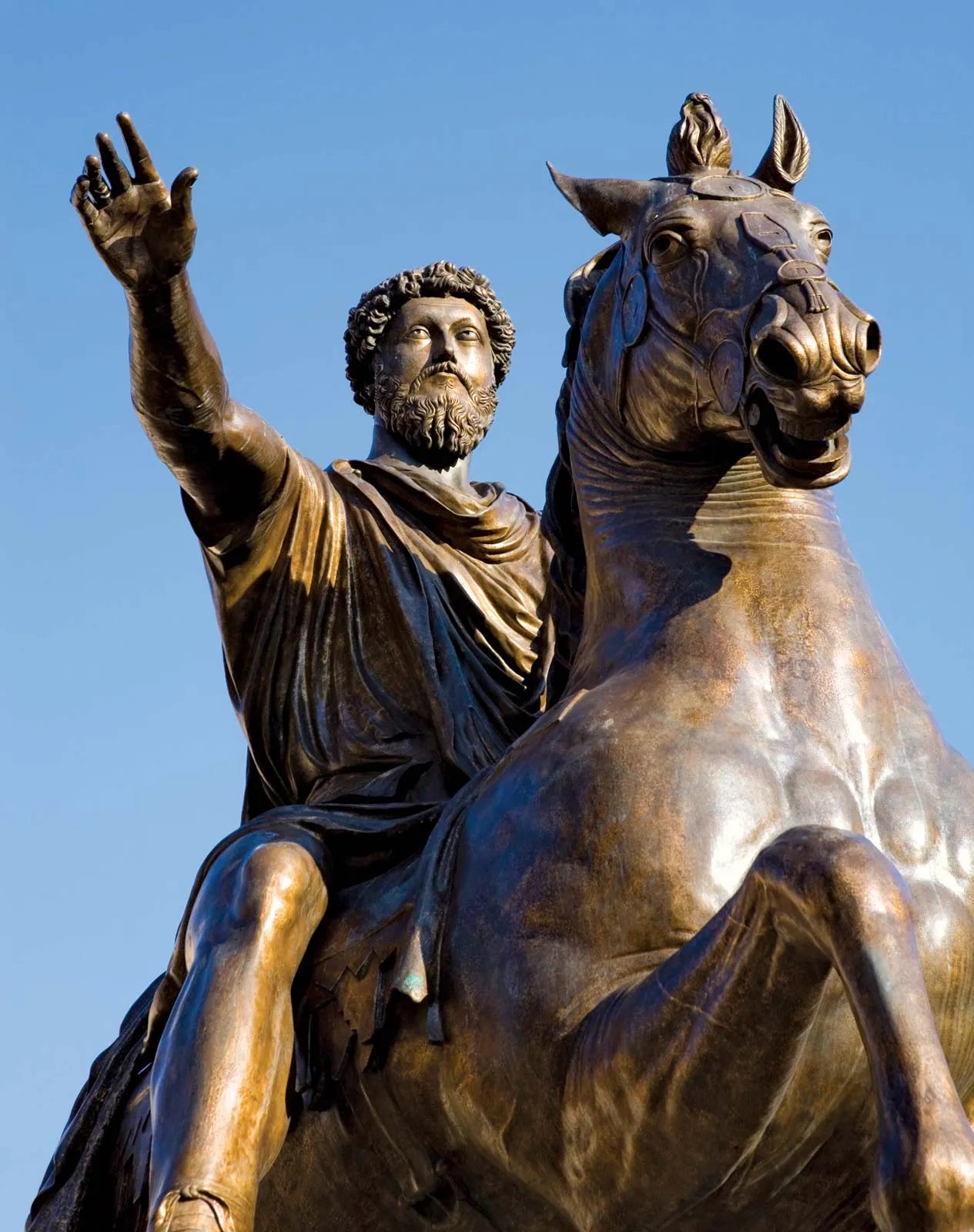
Marcus Aurelius never intended anyone to read his Meditations. Written in Greek during military campaigns along the Danube frontier, these philosophical exercises were the Roman emperor's private attempt to maintain his sanity while managing plagues, wars, and the daily machinery of imperial administration. That we read them today—that they've become more influential than any public speech he ever gave—reveals something profound about the relationship between authentic learning and performed knowledge.
This accidental survival illuminates a crisis at the heart of modern education: we have lost the distinction between wisdom and display, between genuine formation and academic theater. The philosophical tension between Marcus Aurelius and Friedrich Nietzsche—between Stoic acceptance and vitalist assertion—offers an unexpected key to understanding what's gone wrong and how we might begin to repair it.
The Great Irony: Nietzsche's Christian Problem
Nietzsche built his reputation attacking Christianity for corrupting the heroic values of classical antiquity. Yet when we examine the historical record, a delicious irony emerges: the "slave morality" he despised was already flourishing among pagans long before Jesus was born.
Marcus Aurelius, writing a century before Christianity's mainstream success, sounds remarkably like what Nietzsche would call a "slave": constantly checking his pride, accepting suffering, viewing himself as servant to cosmic duty rather than master of his fate. "You have power over your mind—not outside events. Realize this, and you will find strength," the emperor reminded himself—hardly the sentiment of a Homeric warrior seeking eternal glory through conquest.
The philosophical shift "inward" that Nietzsche blamed on Christianity actually began in the Hellenistic period, roughly 300 BCE, when Alexander's conquests shattered the intimate city-state world where citizens could meaningfully participate in politics. Suddenly you weren't a citizen of Athens but a subject in a vast, impersonal empire. The old civic virtues—courage in battle for your polis, honor in public debate—became largely irrelevant.
This historical sequence exposes something crucial about both Stoicism and Nietzschean philosophy: both emerged as responses to the collapse of traditional authority and meaning. The Stoic teaches acceptance because the world has become too complex for individual control. The Nietzschean teaches creative rebellion because traditional values no longer command genuine allegiance. Both are philosophies of spiritual orphanhood.
Two Classrooms, Two Humanities
This tension maps directly onto our contemporary educational crisis, but not in the way most people assume. Consider two hypothetical classrooms:
The Stoic Classroom: Students learn emotional regulation through mindfulness practices. They study character virtues and practice accepting criticism without defensiveness. The curriculum emphasizes resilience, adaptability, and service to the common good. Success is measured by stability, cooperation, and steady progress. The implicit message: life is difficult, but you can control your responses.
The Nietzschean Classroom: Students are encouraged to question authority and develop their unique perspectives. They engage in creative self-expression and learn to see conventional morality as historically contingent. The curriculum emphasizes critical thinking, artistic creation, and individual excellence. Success is measured by originality, passion, and the courage to stand apart. The implicit message: traditional values are dead, so create your own.
Most contemporary schools attempt some confused hybrid of these approaches. We tell students to be both resilient and authentic, both adaptable and unique, both accepting and rebellious. We promote mindfulness alongside entrepreneurship, emotional regulation alongside creative disruption. The result is philosophical incoherence disguised as educational innovation.
But the deeper problem isn't the attempted synthesis—it's that we've trivialized both traditions. True Stoic education isn't stress management; it's cosmology. Marcus Aurelius practiced apatheia (freedom from destructive passions) not as a therapeutic technique but as participation in the rational structure of reality itself. True Nietzschean education isn't positive psychology; it's theology. The "will to power" wasn't about personal success but about creating sacred meaning after "the death of God."
The Performance Problem
Modern education fails both traditions because it systematically avoids ultimate questions. We teach critical thinking without asking what's worth thinking about. We promote character development without articulating what character should develop toward. We encourage self-expression without asking whether all selves are equally worth expressing.
This avoidance creates what we might call "the performance problem"—the gap between authentic learning and academic display that Marcus Aurelius inadvertently solved by never intending to publish his thoughts. His Meditations remain powerful precisely because they demonstrate rather than argue for philosophical wisdom. We overhear someone genuinely wrestling with how to live, not someone performing philosophical sophistication for an audience.
Contemporary education, by contrast, is almost entirely performative. Students learn to display knowledge rather than wrestle with questions. They master the rhetoric of critical thinking without developing genuine intellectual courage. They perform authenticity rather than discover it.
Consider how differently we might approach classic educational dilemmas:
The Cheating Problem: Instead of surveillance and punishment, we might ask: what kind of person do you want to become, and how does this choice serve or undermine that goal? This isn't moral hectoring but philosophical invitation—the same question Marcus asked himself about every decision.
The Motivation Problem: Instead of external rewards and consequences, we might help students discover what Nietzsche called "amor fati"—love of one's fate, including its difficulties. Not because struggle is inherently good, but because meaning emerges through chosen engagement with reality.
The Relevance Problem: Instead of making education "practical," we might help students see that the most practical question is also the most ultimate: how should one live? Every subject—from mathematics to literature to science—becomes a way of exploring this question.
Beyond the False Choice
The conversation between Stoicism and Nietzsche suggests that the apparent choice between acceptance and assertion, tradition and creativity, discipline and freedom, is fundamentally misframed. Marcus Aurelius faced the challenge of ruling a declining empire while maintaining his philosophical commitments. His solution wasn't to choose between duty and wisdom but to discover duty as a form of wisdom—to find meaning precisely in accepting responsibilities he never wanted.
Nietzsche faced the challenge of creating meaning after traditional authorities had lost credibility. His solution wasn't to choose between reason and passion but to envision a new kind of human excellence that could affirm life without external justification.
Both required what we might call philosophical courage—the willingness to face ultimate questions without easy answers. True Stoic acceptance isn't passive resignation but active engagement with reality as it actually is. True Nietzschean creativity isn't arbitrary self-expression but disciplined excellence in service of life-affirming values.
An education informed by this deeper dialogue would produce a different kind of graduate: someone capable of both accepting unchangeable circumstances and changing what can be changed, both preserving valuable traditions and creating new forms of excellence, both serving the common good and developing individual distinction.
Such students would embody what Marcus Aurelius practiced in private and what Nietzsche demanded in public: the integration of wisdom and courage, acceptance and assertion, tradition and creativity. They would be, in the deepest sense, philosophers—not because they could recite philosophical positions but because they had learned to live philosophical questions.
The Teacher as Philosopher
This vision requires a fundamental shift in how we understand teaching itself. Instead of information delivery or skill instruction, teaching becomes what it was for both Marcus and Nietzsche: the modeling of thoughtful engagement with ultimate questions.
Like Marcus writing his private exercises or Nietzsche developing his dangerous thoughts, teachers would need to demonstrate what it looks like to live thoughtfully in challenging circumstances. They would need to embody the philosophical courage they hope to inspire, wrestling publicly with questions they don't yet know how to answer.
The classroom would become what Marcus's military tent was for him: a space for genuine philosophical work, not academic performance. Students would be invited into the ancient conversation about how to live well, given the tools and courage to develop their own thoughtful responses to perennial questions.
This is, ultimately, what both the Stoic emperor and the Nietzschean rebel were after: human beings capable of living with both wisdom and vitality, acceptance and creativity, tradition and innovation. The crisis in modern education isn't ultimately about methods or content but about purpose. When we recover a sense of what education is for—the formation of wise and excellent human beings—the apparent contradictions between different philosophical approaches begin to resolve themselves.
We discover that Marcus Aurelius and Friedrich Nietzsche, despite their surface disagreements, were engaged in the same essential project: learning how to live a fully human life in difficult circumstances. That project remains as urgent today as it was along the Danube frontier or in the solitude of the Swiss Alps. Our classrooms could become laboratories for that same ancient and ever-new experiment in human flourishing.
 | A guest post by
|