

Truth is not the same as Fact (Expanded)
Disclosure in An Age of Scientism

Thanks to all of you who asked for the longer version of yesterday’s essay. The thinking is a work in progress. I have structured the essay in three parts. Part 1 lays out my argument; Part 2 critiques it; Part 3 replies to the critiques. If you have a non-obvious take on AI, philosophy, design, and/or education, we’d love to feature you here at Second Voice. Pitch me zohar@lightningstudios.ai
'
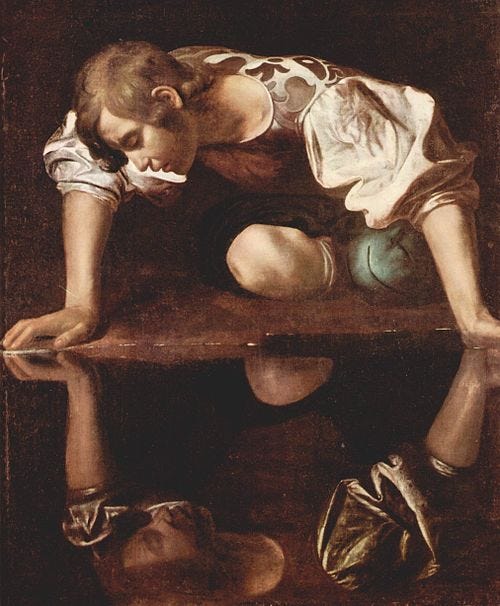
PART I: Truth is Disclosure
I. Introduction: What We Talk About When We Talk About Truth
We use the word “true” with remarkable confidence. “It’s true that water boils at 100°C.” “Shakespeare tells us something true about jealousy.” “She was true to her word.” “That painting captures a truth about loss.” In each case, we mean something, and we trust others understand us. Yet philosophically, these claims invoke radically different concepts of truth—and the confusion between them has consequences far beyond seminar rooms.
This essay argues for a controversial claim: that we have the hierarchy of truth backwards. We’ve allowed “truth” to be colonized by one specialized meaning—correspondence to facts—and in doing so, we’ve impoverished our language, weakened our defenses of the humanities, and disabled ourselves from articulating why meaning matters. The solution isn’t to reject correspondence truth but to recognize it as a subset of a more primordial phenomenon: truth as aletheia, as disclosure or unconcealing.
The stakes are high. In an age where STEM disciplines monopolize prestige and funding, where philosophy departments close and literature majors dwindle, the humanities have struggled to justify themselves. If truth means only factual correspondence, then poetry is decorative at best, philosophy is failed science, and religious texts are just ancient errors. But if truth primarily means disclosure—the revealing of what matters, what calls for commitment, what orients a life—then we can reclaim the ground we’ve conceded. Not apologetically, not by mimicking scientific method, but by asserting: we seek truth. Full stop.
To make this case, I’ll examine three theories of truth: correspondence, coherence, and disclosure. I’ll argue that while each captures something important, aletheia has both historical and philosophical priority. I’ll show that disclosure has rigorous standards that avoid relativism. And I’ll explore the practical implications: how recognizing multiple registers of truth might save both the humanities and our capacity to articulate what makes life meaningful.
II. Three Conceptions of Truth
Correspondence: The Clarity of Adequatio
The correspondence theory holds that truth is adequation—matching between intellect and thing (adequatio intellectus et rei). Thomas Aquinas popularized this formulation, though the intuition traces to Aristotle: “To say of what is that it is not, or of what is not that it is, is false, while to say of what is that it is, and of what is not that it is not, is true.”
The appeal is immediate. I say “It’s raining.” I look outside. If water falls from sky, I’ve stated truth; if not, falsehood. Simple, testable, reliable. This is the backbone of empirical science, legal testimony, journalism—any domain where verification matters. When an engineer calculates load-bearing capacity, we want correspondence truth. Lives depend on it.
Yet correspondence has limits. Consider: “Othello reveals something true about jealousy’s destructive power.” What corresponds to what? There was no actual Othello. The play didn’t report events but imagined them. Yet we’re not speaking metaphorically when we say it’s true. We mean it genuinely discloses something about human psychology. Correspondence theory either dismisses this as non-truth (mere fiction) or contorts itself explaining how imaginary events can correspond to reality.
Coherence: Truth as Systematic Consistency
The coherence theory locates truth not in matching external reality but in the internal consistency of a system of beliefs. A proposition is true if it coheres—fits without contradiction—with other propositions in the system.
This theory has a distinguished lineage. Baruch Spinoza’s geometrical method implied that truth was systematic coherence within the unified substance of God/Nature. Georg Wilhelm Friedrich Hegel developed this explicitly: truth is the self-consistency of Absolute Spirit as it dialectically unfolds through history. Partial truths are aufgehoben—simultaneously canceled, preserved, and elevated—into more comprehensive coherent wholes. The British Idealists, particularly F.H. Bradley and Brand Blanshard, refined this: “Truth is an ideal expression of the Universe, at once coherent and comprehensive.”
Coherence theory captures something correspondence misses: the logical dimension of truth. “It’s raining” and “It’s not raining” cannot both be true, regardless of whether we check outside. The incoherence itself marks falsehood. Mathematical truths seem especially amenable to coherence: 2+2=4 is true because it fits within arithmetic’s consistent system, not because it “corresponds” to physical objects.
Yet coherence alone feels insufficient. A paranoid delusion might be internally consistent—every belief cohering perfectly with every other—while being utterly divorced from reality. A skillful liar maintains coherence. Pure coherence risks detachment from the world, spinning out logical systems that, however elegant, tell us nothing about what is.
Disclosure: Aletheia and the Revealing of World
Martin Heidegger recovered an older Greek understanding: aletheia (ἀλήθεια), often translated as “truth,” literally means “un-forgetting” or “un-concealing.” Truth isn’t a property of propositions but an event—the coming-into-presence of what was hidden, the disclosure of being.
In this view, truth happens when something shows itself, reveals itself, makes itself manifest. A scientific theory is true not merely because its predictions match observations (that’s correspondence) but because it discloses a previously hidden structure of reality. Newton’s laws revealed the cosmos as governed by mathematical regularities. Darwin’s evolution revealed life’s deep historical interconnection. These were disclosures—un-concealings—that transformed how we see the world.
Crucially, for Heidegger, truth in this sense isn’t limited to propositional statements. Art discloses truth. In his essay “The Origin of the Work of Art,” he argues that a Greek temple doesn’t just depict or symbolize truth—it “sets truth to work.” The temple discloses a world: the earth, the sky, the mortals, the divinities in their fourfold relation. Van Gogh’s peasant shoes reveal the peasant’s world—the silent call of the earth, the hardship of labor, the nearness to poverty and death. Poetry reveals truth by opening up dimensions of human existence.
This resonates deeply. When we say King Lear is true, we don’t mean events occurred as depicted (correspondence) or that the plot is logically consistent (coherence). We mean Lear discloses something profound about pride, love, madness, and recognition. It makes manifest a structure of human existence we’ve lived but perhaps never articulated. That’s truth—but truth as aletheia.
III. The Priority Argument: Etymology and History
Here’s the provocative move: What if correspondence theory has committed linguistic imperialism? What if “truth” primarily meant something like aletheia, and adequatio was the later, specialized meaning?
The evidence is etymological and historical. Greek aletheia—the word Plato, Aristotle, and pre-Socratic philosophers used for truth—meant unconcealing long before Latin philosophers developed adequatio. The primordial Greek experience of truth wasn’t “my idea matches the thing” but “the thing shows itself.”
English offers parallel evidence. “Truth” derives from Old English treowth, related to “troth” (as in betrothal) and “truce.” These words share a root meaning faithfulness, loyalty, steadfastness—a standing-by, a commitment. To say something is true is to say: I pledge myself to this, I have “skin in the game.” “To troth” means to betroth—to give one’s pledge. “Truth thine own self be true,” says Polonius—not “be factually accurate” but “be faithful to who you are.”
Even our idiom “rings true” preserves this: not “corresponds to facts” but “resonates with authenticity,” “feels faithful to reality.” When we “true an angle” in carpentry, we make it right, align it properly. The word carries this sense of rightness, of proper orientation, prior to any notion of propositional correspondence.
Hebrew offers a third witness. Emunah (אמונה), typically translated “faith,” carries the sense of faithfulness, steadfastness, trustworthiness. Its verbal root aman (אמן) means to be firm, reliable, faithful—hence “Amen” (so be it, let it be firm). When biblical texts speak of truth (emet, אמת), they invoke reliability, faithfulness, steadfastness in relationship. God’s truth isn’t primarily propositional accuracy but covenantal faithfulness.
This isn’t just linguistic trivia. It suggests that the correspondence sense of truth—while legitimate and crucial within its domain—represents a narrowing of an originally richer meaning. Truth once meant: disclosure, commitment, faithfulness, authenticity, the revealing of what matters. Somewhere along the way—perhaps with scholastic philosophy’s emphasis on propositions, perhaps with modernity’s scientific triumph—”truth” got restricted to meaning correspondence.
If this historical claim holds, then the burden of qualification falls in the opposite direction than we’ve assumed. We shouldn’t say “Heideggerian truth” versus “real truth.” We should say “correspondence truth” or “propositional truth” versus truth simpliciter. Aletheia isn’t a specialized philosophical concept; adequatio is. Disclosure isn’t an eccentric alternative to correspondence; correspondence is a restricted subset of disclosure.
This matters because how we name things shapes how we think. When “truth” means only correspondence, we implicitly privilege scientific-propositional knowing over other legitimate modes. We create a world where poetry must apologize for not being physics, where Torah must defend itself against the charge of historical inaccuracy, where philosophy papers must mimic scientific method to seem rigorous. But what if we’ve conceded the wrong ground from the start?
IV. Truth Beyond Propositions: Two Cases
Take two examples that illuminate how truth operates beyond propositional correspondence:
The Case of Smell: Pre-Cognitive Knowing
Neuroscience has revealed that olfaction plays a significant role in social trust, mate selection, and threat assessment—largely beneath conscious awareness. You meet someone at a party. Within moments, you have a sense—not quite articulable—whether they’re trustworthy. You might not notice you’re processing olfactory information at all. Yet your body is reading stress pheromones, genetic compatibility markers, health indicators.
This isn’t propositional knowledge. You’re not forming the thought: “This person’s sweat contains compound X at concentration Y, which correlates with trait Z at rate W, therefore...” The knowing happens pre-cognitively, somatically. You could, with enormous effort, reverse-engineer it into explicit claims. But that’s not how the truth-discernment occurs. The person “rings true” or “rings false”—note the language—before any proposition forms.
This is not irrational but a-rational: a different register of knowing that evolution honed over millennia. When we trust this somatic discernment, we’re not being less rigorous than when we construct syllogisms. We’re operating in a different mode of disclosure. The truth comes through the body, through senses, through attunement to subtle signals our conscious mind cannot process.
We can be wrong, of course. Our somatic knowing isn’t infallible—someone might mask threatening cues, or we might be triggered by irrelevant factors. But we can also be wrong propositionally. The point isn’t that smell-based knowing is superior to propositional knowing, but that it’s legitimate knowing, delivering genuine truth through non-propositional means.
The Case of Jim Simons: Truth Without Explanation
James Simons, mathematician turned hedge fund manager, founded Renaissance Technologies and its Medallion Fund, which achieved returns of 66% annually (before fees) from 1988 to 2018—the most successful quantitative trading record in history. Simons employed mathematicians and physicists to identify correlations in market data. The key: their models detected patterns that worked—generated reliable profits—but which often defied explanation.
The algorithms found correlations: certain combinations of price movements, trading volumes, market conditions that predicted future movements with statistical reliability. These weren’t theories about why markets moved—they were patterns in the data that repeated. Simons himself couldn’t always explain why correlation X existed. He didn’t need to. The signal was real, verifiable through repeated profitable trades.
Here we have something fascinating: correspondence-level truth (the correlations exist, the predictions work) without coherence-level explanation (we can’t integrate this into our theoretical understanding of market behavior). The algorithm knows something true that Simons doesn’t consciously understand. The knowing operates at a level below full rational transparency.
Both examples point toward a picture of human knowing that exceeds the propositional. We are creatures who know through smell, through pattern-recognition below the threshold of explanation, through aesthetic resonance, through stories we can’t reduce to arguments yet which orient our lives. To restrict “truth” to conscious, propositional, correspondence-checkable claims is to cut ourselves off from acknowledging legitimate forms of knowing.
V. Mortimer Adler: Genre Determines Truth-Conditions
Mortimer Adler’s How to Read a Book, according to Rabbi David Fohrman, makes a deceptively simple claim: when reading a book, you must first determine its genre, because genre determines how to read it. If you read a physics textbook as poetry, you’ll misread it—mistaking equations for metaphors. If you read poetry as a physics manual, you’ll also misread it—demanding literal referents for imaginative constructions.
Fohrman extends this insight to Torah: the Five Books of Moses, the Prophets, the Writings are multi-genre texts. They contain history, law, poetry, wisdom literature, narrative, prophecy. To read all of it as literal historical reportage is a genre mistake. But so is reading all of it as purely symbolic poetry. The text’s truth depends on correctly identifying which genre operates in each passage.
This seems like an interpretive point about reading, but it has profound implications for truth itself. Adler’s insight suggests that truth-claims themselves have implicit genre, and recognizing that genre determines what truth-conditions apply.
Consider the statement “God is love.” What genre of claim is this?
If it’s a correspondence claim: We should be able to verify it. Is there an entity, God, that has the property, love? How do we check? The statement becomes empirically problematic—God isn’t observable, love isn’t a measurable property. Either we dismiss the claim as meaningless (logical positivism) or we try elaborate arguments from religious experience, design, etc.
If it’s a coherence claim: Does “God is love” fit consistently within Christian theology’s system? Perhaps. Does it cohere with the existence of suffering (theodicy problem)? That’s more complicated. Coherence might give us theological systematicity but doesn’t tell us whether the system describes reality.
If it’s a disclosure claim: “God is love” attempts to reveal something about the fundamental structure of reality—that the ground of being is characterized by self-giving, that the universe is ultimately oriented toward goodness, that love is not accident but essence. This isn’t verifiable by correspondence, but it invites existential testing: Does living as if this were true disclose a world worth inhabiting? Does it enable human flourishing? Does it prove fruitful across generations?
Genre-awareness means recognizing that demanding correspondence-verification of a disclosure-claim is a category mistake. It’s like asking what a sonnet weighs or what color Tuesday is. The question misapplies the evaluative framework.
VI. Disclosure Has Standards: Against Relativism
The obvious objection: If truth-as-disclosure doesn’t require correspondence to facts, what prevents relativistic collapse? What stops anyone from claiming anything “discloses truth for them”?
The answer: Disclosure has standards—just not correspondence standards. These standards are qualitative, not quantitative; demanding, not arbitrary. Let me articulate five:
1. Depth vs. Shallowness
Some disclosures reveal fundamental structures of existence; others are trivial. King Lear discloses profound truths about pride, recognition, love, and madness—truths that resonate across cultures and centuries. A Hallmark card about love might “resonate” with someone, but it’s shallow.
We can point to why Lear is deep: it grapples with multiple dimensions of human existence simultaneously, it refuses easy answers, it reveals contradictions in the human heart, it rewards repeated engagement, it connects personal psychology to political power to metaphysical questions about justice and the gods. Each re-reading reveals new layers. Scholarly commentary accumulates without exhausting its significance.
A Hallmark card, by contrast, offers a single, simple sentiment. It doesn’t reward sustained attention. It doesn’t grapple with complexity or contradiction. It provides momentary pleasure but no lasting illumination.
Depth isn’t measurable, but it’s recognizable through sustained engagement. A philosophy that reduces all human motivation to one drive (crude Freudianism or economic reductionism) is shallower than one that recognizes multiple irreducible dimensions of existence. A theology that presents God as cosmic vending machine (”pray and get stuff”) is shallower than one that grapples with divine mystery and human suffering.
2. Fruitfulness Over Time
Does this disclosure generate insight, enable new understanding, bear fruit across time and contexts? Freud’s disclosure of unconscious mind, Darwin’s disclosure of natural selection—whatever their empirical limitations or errors in detail—proved generative. They opened new lines of inquiry, enabled new explanations, generated rich traditions of interpretation and application.
Contrast this with conspiracy theories or pseudoscientific claims that prove sterile. They might provide momentary “aha!” feelings but don’t generate progressive research programs. They explain everything (and thus nothing). They don’t lead anywhere. They collapse when scrutinized rather than opening up under investigation.
Great disclosures are inexhaustible. Torah has sustained millennia of commentary precisely because its disclosures prove endlessly rich. Each generation finds new meaning, not because anything goes, but because the depth supports continued investigation. Buddhist sutras, Platonic dialogues, Shakespearean plays—these create ongoing interpretive traditions because they disclose structures rich enough to reward sustained engagement.
3. Intersubjective Sustainability
Genuine disclosure isn’t purely private. It can be shown to others, creates communities of interpretation, proves communicable across persons and cultures. The Torah, the Buddhist sutras, Plato’s dialogues, Shakespeare’s plays—these create and sustain interpretive communities across vast spans of time and culture.
“My personal truth” that convinces no one else, that dies with me, that cannot be shared or communicated—this is suspect as disclosure. It might be psychological comfort or private meaning, but it’s not truth. Truth has a public dimension, even when it addresses intimate personal matters.
This doesn’t mean truth is democratic (majority vote). Prophets often stand against majority opinion. But even prophets must eventually find communities who recognize what they’ve disclosed. A “truth” that remains forever sealed in one mind is indistinguishable from delusion.
Importantly, intersubjective sustainability operates across time as well as space. Fads generate momentary enthusiasm but fade. Genuine disclosure sustains communities across generations. This is why “great books” maintain their status—not because of institutional conservatism but because they continue to disclose meaningfully to new readers in new contexts.
4. Existential Commitment: Skin in the Game
This criterion draws on the etymology of truth as troth. To say something is true isn’t just to say “this resonates with me” or “I find this meaningful.” It’s to say: I’m willing to stake my existence on this. I’m committed. I have skin in the game.
Dostoevsky’s Ivan Karamazov articulates this brilliantly. He cannot accept a God who would permit innocent children to suffer, even if it’s all resolved in some cosmic harmony. He wouldn’t accept a ticket to paradise if it required even one child’s tear. This isn’t an argument—it’s an existential disclosure-claim: “I cannot live in a world where this is true.” That’s a truth-test, but not a correspondence test.
The skin-in-the-game criterion distinguishes authentic disclosure from mere preference or cheap talk. It’s easy to say “This is my truth” when it costs nothing. It’s different to say “This is true, and I’ll bet my life on it—my time, my resources, my reputation, my fundamental orientation.”
Someone who says “God is love” but lives with cruelty and indifference hasn’t disclosed truth—they’ve uttered words. Truth-as-troth means faithfulness, standing by the claim through action. This is why we respect people who live their convictions even when we disagree with them. They’re treating truth seriously—staking something real on it.
5. Coherence with Lived Experience
While disclosure-truth doesn’t reduce to correspondence, it also can’t systematically contradict our lived experience without becoming suspect. A disclosure that requires denying obvious features of reality collapses into delusion.
If someone claims “suffering doesn’t exist” but manifestly experiences pain, the disclosure fails. If a worldview requires constantly compartmentalizing—believing X in religious contexts but acting as if not-X everywhere else—it fails coherence with lived experience.
This criterion isn’t the same as correspondence (matching external facts), but it requires contact with reality. The disclosure must be about the world we actually inhabit, not a fantasy world. It must help us navigate existence, not require us to deny existence.
Buddhist claims about suffering and impermanence cohere with lived experience—we do experience suffering, things do change. Christian claims about love, sacrifice, and redemption cohere with experiences of genuine self-giving and transformation. These aren’t empirically testable, but they’re not divorced from experience either.
The Problem of Religious Fundamentalism
Does jihadist theology fail on grounds of disclosure? And if not, then doesn’t this prove disclosure is inadequate as a yardstick?
VII. Against Scientism, Not Against Science
Scientism—the ideology treating scientific method as the only legitimate path to truth—must be distinguished from science itself. Science is extraordinarily powerful within its domain: measurable phenomena, repeatable experiments, testable predictions. Medical science has extended lifespans. Physics has revealed the cosmos. Biology has shown life’s deep history. These achievements deserve profound respect.
The problem arises when correspondence-truth colonizes all domains. When humanities must justify themselves through quantifiable outcomes. When poetry is dismissed as “merely subjective.” When religious or philosophical claims are treated as failed scientific hypotheses. When only questions amenable to empirical falsification count as worth asking.
This creates a paradox: STEM’s success has made it culturally dominant, but this dominance impoverishes our understanding of truth itself. We can build smartphones but struggle to articulate why anything matters. We can sequence genomes but have difficulty saying what makes life meaningful. We can model climate systems but founder when asked what we owe to future generations.
These aren’t scientific questions. They’re questions of disclosure—what shows up as significant, what calls for commitment, what orients life or civilization. If we restrict “truth” to correspondence, we render these questions literally meaningless—not amenable to truth-evaluation. At best they become “values” (subjective preferences) rather than truths.
But this is absurd. The claim “human dignity matters” or “beauty is worth preserving” or “justice demands we care for the vulnerable”—these aren’t less true than “water boils at 100°C.” They’re true in a different register. If we’ve lost the language to say so, we’ve disabled ourselves from defending what the humanities discover, what art reveals, what wisdom traditions preserve.
VIII. Practical Implications: Saving the Humanities
This isn’t abstract philosophy—it’s about whether we can defend domains of inquiry that don’t operate by correspondence logic.
Literature doesn’t become more “true” by adding scientific apparatus. Understanding metaphor doesn’t require fMRI scans. The truth Tolstoy discloses about Anna Karenina isn’t verified by checking whether such a woman existed. Literature reveals truths about human experience, moral complexity, psychological depth—truths tested by recognition: “Yes, that’s how grief feels.” “Yes, that’s how self-deception operates.”
Philosophy isn’t failed science. It’s not trying and failing to generate testable predictions. It interrogates concepts, explores possible worlds, clarifies frameworks, discloses structures of existence. When Rawls develops the “veil of ignorance,” he’s not making empirical claims about how societies form. He’s disclosing something about the logic of fairness. These are truth-claims—but disclosure truths.
Religious texts aren’t primitive science. Genesis isn’t competing with geology. Torah isn’t a failed history textbook. These texts disclose relationships (between humans and God, humans and nature, humans and each other), meanings (of suffering, exile, redemption), and demands (justice, mercy). To read them only for correspondence-checkable claims is a genre mistake.
Does Genesis disclose something true about human nature (creation in divine image, temptation, sibling rivalry, exile)? That’s the right question. Not “Did it happen exactly this way?” but “Does this story reveal the structure of human existence?”
This reframing doesn’t make the humanities subjective or fuzzy. It recognizes they have rigorous standards: depth, fruitfulness, intersubjective sustainability, existential coherence, commitment. A bad novel is recognizably bad—shallow, derivative, unconvincing. A bad philosophical argument fails—not because it’s not empirical, but because it’s confused or shallow.
We need correspondence-truth to navigate the physical world. But we need disclosure-truth to navigate meaning, value, purpose—questions that science, by its own methodological constraints, brackets out. The person who reads only physics never literature doesn’t know more truth—they know more of one kind while remaining ignorant of another. They might build better bridges but have no idea why bridges matter or what kind of world those bridges should serve.
IX. Conclusion: Towards a Fuller Truth
We began with three theories of truth. Correspondence gives us factual rigor but misses existential depth. Coherence captures logical systematicity but risks detachment from reality. Aletheia resonates with something essential and captures what the other theories miss.
My thesis: Aletheia—disclosure—is truth in its fullest sense, the primordial phenomenon that etymology across languages preserves. Correspondence and coherence are specialized modes of truth, restricted domains where particular standards apply. They’re necessary but not sufficient.
When we let “truth” be monopolized by correspondence, we impoverished our language and thought. We made it harder to defend poetry, philosophy, religious wisdom, the humanities. We conceded that “true” means “scientifically verifiable,” then apologized or mimicked scientific method where it doesn’t apply.
But if truth primarily means disclosure—unconcealing, making-present, revealing what matters—then correspondence is the qualified term. Say “scientific truth” or “factual truth” when you mean adequatio. Reserve “truth” simpliciter for the broader phenomenon.
Disclosure has standards: depth, fruitfulness, intersubjective sustainability, existential commitment, coherence with lived experience. These aren’t correspondence standards, but they’re rigorous. They let us distinguish profound disclosure from shallow sentiment, wisdom from delusion, great traditions from death cults.
The practical stakes are high. We live in an age of scientism, where measurable truths monopolize prestige, where STEM receives funding while humanities close. If truth is only correspondence, this is rational. But if we reclaim truth as disclosure, we can make the case—not apologetically but confidently—that literature, philosophy, and religious study seek truth. Full stop.
We are creatures who know through smell before thought, who detect patterns we can’t explain, who orient our lives through stories we can’t reduce to propositions. To honor this isn’t to abandon reason but to refuse the cramped rationalism that would deny everything it cannot quantify.
When someone says “Water boils at 100°C,” we check facts. When someone says “God is love,” we ask: Does this disclosure prove deep or shallow? Does it enable flourishing? Can I commit to it? These are different questions requiring different methods. But both deserve to be called questions about truth.
Perhaps that’s enough. Perhaps insisting that truth has this richer dimension—while maintaining standards against relativism, while honoring both science’s rigor and art’s revelation—perhaps this lets us reclaim what we’ve almost lost: the language to say that beauty is true, that justice is true, that some lives and visions are truer than others in ways that matter more than facts.
PART II: THE RATIONALIST CHALLENGE
The Pinkerian-Popperian Critique: Where This Argument Collapses
Let me present the strongest possible objection to everything I’ve argued, from the perspective of rigorous empiricism and rational criticism in the tradition of Karl Popper and Steven Pinker. In engaging with the challenge, I hope to model that disclosure claims must be open to conversation, rather than used to end conversation.
1. The Fundamental Conflation: Homonyms Aren’t Theories
My essay commits a basic conceptual error: conflating different uses of a word and treating them as if they referred to theories of a single underlying concept. Yes, we say “Shakespeare tells us something true about jealousy” and “It’s true that water boils at 100°C.” But these are simply different uses of the same word—homonyms or analogical extensions—not different theories of a unified concept called “truth.”
We also say “true north,” “true love,” and “my aim was true,” but no one confuses these with epistemological claims about facts. My etymological argument (truth from troth) proves too much: if etymology determined philosophical meaning, then “nice” would still mean “foolish” (from Latin nescius), “meat” would mean any food (Old English mete), and “awful” would mean “full of awe” rather than bad. Etymology describes historical usage patterns, not philosophical analysis.
The real question is: Should we use the same concept of truth for propositions and for aesthetic judgments? The burden is on me to show why we should, not merely to assert historical priority. History of usage tells us nothing about what concepts we ought to employ.
2. The “Standards” for Disclosure Are Fatally Vague and Circular
The five criteria offered—depth, fruitfulness, intersubjective sustainability, existential commitment, coherence with lived experience—sound impressive but dissolve completely under scrutiny:
On “Depth”: Who determines what’s deep? My essay claims King Lear is deeper than a Hallmark card. I agree. But why? “It grapples with multiple dimensions,” “refuses easy answers,” “reveals contradictions”—these are just aesthetic judgments redescribed using evaluative language. They’re not standards. They’re expressions of preference dressed in philosophical vocabulary.
Two intelligent, educated people can disagree about whether Lear or the Book of Job is “deeper.” How do we adjudicate? By citing more of our intuitions about depth? This is perfectly circular. At least correspondence gives us: check the facts against reality. Coherence gives us: check the logic. “Depth” gives us: check... what? Our refined sensibilities? But whose sensibilities count as refined? This isn’t a standard; it’s an appeal to cultural authority disguised as objectivity.
On “Fruitfulness”: Freud is cited as “fruitful despite empirical limitations.” But if his theories have led to harm in the form of therapy culture, are his findings fruitful?
I might respond: “I meant intellectually fruitful, not politically or practically.” But this is precisely the problem. Without clear, non-circular standards, “fruitful” becomes “generated ideas I personally find interesting or important.” That’s not truth; that’s influence. That’s cultural impact. Astrology has been enormously fruitful by that standard—it’s generated endless commentary, shaped cultures, influenced literature. Is astrology therefore true?
On “Intersubjective Sustainability”: Astrology has sustained communities of interpretation for millennia across cultures. So has flat-earth theory (historically). Homeopathy has millions of believers worldwide. Conspiracy theories sustain communities. The essay wants to dismiss these as shallow or incoherent with experience, but many practitioners would vehemently disagree. They claim their systems are deep, fruitful, and coherent with their experience.
By what non-question-begging standard do we rule them out? The essay will say they fail other criteria, but those criteria are equally contestable. We’re left with: “My preferred disclosures meet the standards; yours don’t”—but the standards themselves are determined by what we antecedently prefer. This is textbook circularity.
On “Existential Commitment”: Cult members show enormous commitment, often unto death. So do adherents of demonstrably false ideologies. The 9/11 hijackers showed ultimate existential commitment—they literally died for their beliefs. The Heaven’s Gate cult members committed mass suicide based on their cosmology. Are these “true” because people staked their lives on them?
The essay tries to escape by saying their visions were “shallow” and “incoherent with human flourishing,” but they would disagree. We’re back to: Who decides what counts as flourishing? What makes one person’s existential commitment authentic and another’s fanatical? This isn’t a standard; it’s relativism dressed up in philosophical language, then selectively applied to reach predetermined conclusions.
On “Coherence with Lived Experience”: This standard is either vacuous or collapses into correspondence. If it means “doesn’t contradict empirical facts,” then it’s just correspondence by another name. If it means something else (”resonates with my experience”), then it’s subjective and admits no adjudication. Someone committed to an ideology can always reinterpret their experience to fit it—that’s what cognitive biases like confirmation bias explain. This isn’t a test for truth; it’s a description of how belief persists despite evidence.
3. The Jihadist Example Actually Proves the Opposite Point
The essay implies jihadist theology fails disclosure-standards because it’s shallow, sterile, isolated from community, and destructive. But this evaluation is entirely external—it’s our judgment imposed from outside their framework.
From within the jihadist framework, martyrdom theology is:
Deep: It addresses ultimate questions about divine will, human purpose, cosmic justice, eternal destiny
Fruitful: It generates intense community, clear purpose, strong identity
Intersubjectively sustainable: It maintains communities of believers
Existentially committed: Adherents literally die for it
Coherent with their lived experience: They interpret their experiences through this lens
The essay’s response amounts to: “We can judge their disclosure by our standards of depth, flourishing, etc.” But that’s exactly the problem disclosure-truth was supposed to avoid. If we’re imposing Western humanistic standards on non-Western disclosures, how is this different from the correspondence-theory imposing Western scientific standards universally?
The essay hasn’t escaped relativism; it’s just dressed relativism in normative language and hoped we wouldn’t notice. When push comes to shove, “depth” means “deep by our standards,” “flourishing” means “our conception of flourishing,” and we’re right back where we started: different frameworks with no neutral standpoint for adjudication.
4. Science’s Success Demands Explanation—and Demolishes the Thesis
The correspondence theory—despite its alleged narrowness—has produced: antibiotics that save millions of lives, airplanes that reliably fly, computers that function, the Green Revolution that prevented mass starvation, satellites that enable GPS, vaccines that eradicated diseases. Every technology we depend on resulted from correspondence-truth methods.
What has disclosure-truth produced? Beautiful art, meaningful experiences, inspiring texts—all valuable, yes. But notice: these aren’t truth-seeking enterprises in the sense science is. Art doesn’t aim at truth; it aims at beauty, impact, meaning. Philosophy doesn’t aim at truth the way science does; it aims at clarity, consistency, wisdom. These are valuable activities, but calling them “truth-seeking” (even as “disclosure-truth”) doesn’t make them more valuable. It just confuses categories and muddies clear thinking.
The essay wants to protect the humanities from STEM’s dominance by claiming they seek truth too. But this is intellectually dishonest. The humanities don’t seek truth in the sense that yields progressive knowledge accumulation. Literary criticism doesn’t converge on answers the way physics does—literary theories multiply and fragment. Philosophical schools proliferate; they don’t narrow toward consensus the way scientific research programs do.
And that’s fine! It’s not a defect. But don’t call it truth-seeking. Call it what it actually is: meaning-making, value-exploration, aesthetic experience, cultural transmission, conceptual clarification. These are genuinely valuable. But they’re not truth in any sense that deserves the name.
5. The Smell and Simons Examples Actually Support Correspondence
The essay cites olfactory trust-detection and Renaissance Technologies’ algorithms as examples of “truth beyond propositions.” But both examples actually support correspondence theory rather than undermining it:
On Smell: Yes, we detect trustworthiness pre-cognitively through pheromone processing. But this is just correspondence-checking at a subconscious, biochemical level. Evolution built neural circuits that correspond pheromone patterns to threat/trust states. There’s an implicit proposition: “This person’s biochemical signature correlates with danger/safety,” and that proposition either corresponds to reality or doesn’t.
We can be wrong—someone masks their scent, or our circuits misfire. But that’s exactly what we’d expect from a correspondence system. The fact that correspondence-checking happens unconsciously, through evolved mechanisms rather than conscious reasoning, doesn’t make it a different kind of truth. It’s still correspondence—just implemented in wetware rather than conscious thought.
On Simons: The algorithms find correlations that predict market movements. These predictions either work (correspond to future price changes) or they don’t. The fact that humans don’t understand why the correlations exist doesn’t make this non-correspondence truth; it just means the correspondence-checking mechanism (the algorithm) is opaque to conscious understanding.
The algorithm is detecting patterns in data and using them to make predictions. Those predictions either match reality (make money) or don’t (lose money). This is textbook correspondence. The mystery is in the explanation (why do these patterns exist?), not in the nature of truth being tested.
Both examples show that correspondence can happen through non-conscious, non-propositional mechanisms. They don’t show a different kind of truth. They show that truth-checking is more cognitively diverse than naive correspondence theory assumed. The solution is a more sophisticated correspondence theory, not abandoning correspondence for vague “disclosure.”
6. The Genre Argument Collapses Into Motivated Reasoning
The essay claims we shouldn’t read Genesis for correspondence-truth because it’s the “wrong genre.” But this is a textbook case of motivated reasoning—reinterpreting a text to save it from falsification.
The text presents itself in narrative historical form: “In the beginning God created...” “Abraham dwelt in...” “Moses led the people out of Egypt...” It’s written in the style of historical chronicle, not poetry or parable (which the Bible also contains, so the authors knew the difference). For thousands of years, the vast majority of readers—including the most learned scholars—took it as historical (correspondence-level) truth.
Now we discover it doesn’t correspond to facts: the earth isn’t 6,000 years old, there was no global flood, the Exodus likely didn’t happen as described, etc. So we say: “Ah, but that’s a genre mistake! It was never meant as history; it’s theology/myth/wisdom literature!”
But how did we learn it’s not history? By discovering it doesn’t correspond to facts. So we use correspondence-failure to determine genre, then claim genre exempts the text from correspondence-checking. This is perfectly circular.
Religious believers themselves disagree about genre. Fundamentalists insist Genesis is literal history. The essay dismisses this as “genre mistake,” but on what authority? The essay’s preferred reading—which conveniently saves the text from falsification by reinterpreting it—isn’t “discovering the true genre.” It’s rhetorical maneuvering to insulate cherished beliefs from empirical criticism.
This is what makes Popper’s falsifiability criterion so powerful: it prevents exactly this kind of defensive redefinition. A claim that can be reinterpreted to accommodate any possible evidence isn’t making contact with reality at all.
7. The Real Motive: Protecting Religion and Humanities Through Verbal Sleight-of-Hand
Let’s be honest about what’s happening here. The essay wants to protect religious texts and humanistic inquiry from empirical criticism by claiming they operate in a different domain of truth. But this is a retreat, not a defense. It’s intellectual surrender disguised as philosophical sophistication.
Historically, religious texts did make correspondence claims: miracles happened, prayers were answered, the dead rose, God intervened in history. As science progressively explained phenomena naturally, religion retreated: “Well, Genesis isn’t literal history, it’s theology.” “Miracles aren’t physical events, they’re symbolic.” “Prayer doesn’t cause physical effects, it changes the pray-er’s consciousness.” “God doesn’t intervene physically, God works through natural processes.”
This pattern is called “strategic retreat” or “moving the goalposts.” Each time science explains something, religion says “That wasn’t the important part anyway; the real truth is in the meaning/symbolism/experience/relationship.” The essay codifies this retreat as philosophy: “We were never making correspondence claims! It was always about disclosure!”
But this is historically false and philosophically dishonest. These texts were making correspondence claims. Believers did think miracles physically happened, prayers physically worked, God physically created the world. The reinterpretation as “disclosure” came after and because of correspondence-failure.
Similarly with the humanities. As STEM produces tangible results (technologies, cures, predictions) and the humanities don’t, there’s anxiety about justification. The essay’s response: “We produce different but equally valid truth!” But this rings completely hollow.
If philosophy produced truth like science does, we’d have answers piling up, knowledge accumulating, consensus emerging. We don’t. Philosophical questions remain open millennia later. That’s fine—philosophy does valuable things (clarifies concepts, explores possibilities, challenges assumptions, trains rigorous thinking). But these aren’t truth-seeking in the robust sense. Pretending they are by inventing “disclosure-truth” doesn’t make them more valuable. It just muddles clear thinking and creates confused categories.
8. Falsifiability Remains the Only Viable Demarcation
Karl Popper’s criterion still stands as the best demarcation between knowledge-claims and non-knowledge-claims: statements that could be proven false, but haven’t been, earn provisional acceptance as knowledge. Statements that cannot be proven false aren’t knowledge claims at all—they’re unfalsifiable, and thus not amenable to rational evaluation.
“Water boils at 100°C at sea level” is falsifiable. Test it with thermometer. If it consistently doesn’t boil at 100°C, the claim is false. “God loves you” isn’t falsifiable—no possible observation would disprove it. The claim is compatible with literally any evidence: suffering, joy, tragedy, triumph, answered prayers, unanswered prayers, presence, absence—everything confirms or is reinterpreted to confirm.
That doesn’t make it false; it makes it not a knowledge claim. It’s an expression of faith, a hope, a commitment, a value—valuable things! But not truth in any sense that does cognitive work.
The essay wants to say: “’God loves you’ discloses something true about reality’s structure.” But notice the move: “discloses something true” is deliberately vaguer than “is true.” What does it disclose? “That being is characterized by self-giving...” But this is just poetry. Either God exists and has the property of loving, or not. That’s a correspondence claim. If we can’t verify it, we should suspend judgment (agnosticism), not invent a new kind of truth that conveniently exempts it from verification.
The essay’s standards (depth, fruitfulness, etc.) aren’t standards at all—they’re just disguised expressions of aesthetic and moral preferences. They don’t tell us what’s true; they tell us what the author values. That’s fine for values-discourse, but it’s not truth-discourse.
9. The Political Dangers Are Real and Serious
This view has genuinely dangerous consequences that the essay doesn’t take seriously enough. When we allow claims to escape correspondence-checking by labeling them “disclosure-truth,” we enable:
Religious fundamentalism: “My sacred text discloses truth; your empirical criticism is a category mistake. You’re reading it in the wrong genre.” This shields any religious claim from evidence-based criticism.
Pseudoscience: “Homeopathy discloses healing truth that your reductionist clinical trials can’t capture. You’re using the wrong standards—depth and holistic understanding matter, not just correspondence.” This enables medical fraud.
Authoritarianism: “Our ideology discloses the truth of history and human nature. Your empirical evidence about failed policies is shallow scientism.” This enables totalitarian systems to dismiss evidence.
Postmodern relativism: “My lived experience discloses my truth. You can’t judge it by your Eurocentric, patriarchal standards.” This makes rational criticism impossible and fragments shared reality.
The essay tries to avoid these by invoking its standards (depth, etc.), but as we’ve seen, those standards are circular, contestable, and ultimately subjective. Without falsifiability, without correspondence, we have no shared ground for adjudicating disputes. We’re left with: “This discloses deeply to me.” “Well, that discloses deeply to me.” And then what? Power decides. The loudest voice wins. The dominant culture imposes its “standards.”
The correspondence theory, for all its alleged narrowness, gives us something precious: shared reality. A common ground where disputes can be settled. Evidence that, in principle, anyone can examine. The essay’s disclosure-truth fragments this shared reality into incommensurable perspectives, then tries to prevent total relativism through standards that themselves have no neutral justification.
10. The Humanities Need a Different Defense
The humanities don’t need to falsely claim they seek truth like science does. They need to assert what they actually do, and defend that on its own terms:
Literature cultivates moral imagination, emotional intelligence, psychological insight. It shows us how lives feel from inside. It develops empathy and expands our sense of human possibility. These are valuable. We don’t need to call them “truth-seeking” to defend them.
Philosophy clarifies concepts, exposes hidden assumptions, maps logical space, explores implications. It doesn’t discover new facts about the world but helps us think more clearly about the facts we have. This is valuable. We don’t need to pretend it’s “disclosure-truth” to justify it.
Religious studies examines how humans have grappled with ultimate questions, transmitted values, built communities, created meaning. Understanding this is part of understanding humanity. This is valuable. We don’t need to claim religious texts “disclose truth” to justify studying them.
The essay’s strategy—trying to expand “truth” to include what the humanities do—backfires. It makes “truth” so vague that it loses meaning. Better to say: Not everything valuable is truth-seeking. Meaning-making, value-exploration, aesthetic experience, conceptual clarification, moral imagination—these are genuinely valuable human activities. They don’t need to be truth-seeking to matter.
By trying to defend the humanities through conceptual confusion (inventing “disclosure-truth”), the essay actually undermines them. It suggests they’re insecure about their value and need to parasitize science’s prestige by claiming to seek “truth too, just a different kind!”
A confident defense of the humanities would say: “We don’t seek truth in science’s sense. We do something different—and just as necessary. Here’s what and why.” That’s honest. That’s defensible. “Disclosure-truth” is neither..
PART III: MY REPLY TO THE RATIONALIST CHALLENGE
Reply to Objection 1: On Conflation and Homonyms
The objection: I’m conflating different uses of “true” (homonyms) and treating them as theories of one concept. Etymology doesn’t determine philosophical meaning.
My response: The objection is partially right but misses something crucial. Yes, etymology alone doesn’t settle philosophical questions—I acknowledge the “nice” and “meat” examples show that historical usage evolves. But I’m making a stronger claim than mere etymology: I’m arguing that our current usage still reflects the broader meaning, and that restricting “truth” to correspondence creates practical and theoretical problems.
Consider how we actually talk. When someone says “That film was true to life,” or “She’s true to herself,” or “That rings true,” we’re not using mere metaphors. We’re invoking a concept of authenticity, fidelity, proper alignment with reality. When literary critics debate whether a novel is “true,” they’re not confused—they’re asking whether it discloses genuine structures of human experience.
The rationalist wants to say these are just analogical extensions of the “real” (correspondence) meaning. But why should we grant that correspondence is primary rather than one species of a broader genus? The burden of proof cuts both ways.
Here’s my argument: We need a term for what great novels, profound philosophies, and transformative religious insights do—they reveal reality’s structures in ways that aren’t reducible to factual propositions. We could invent a new technical term (”disclosure-worthiness”?), but “truth” already does this work in ordinary language. The correspondence theorist wants to police language to restrict “truth” to one meaning. I’m arguing this restriction comes with costs: it makes large swaths of rational discourse (ethics, aesthetics, meaning) seem cognitively second-class.
Concession: I cannot prove that “truth” must encompass disclosure. Someone could stipulate that “truth” means only correspondence and use other terms for what I’m calling disclosure. That’s coherent. My argument is pragmatic: this stipulation impoverishes our conceptual resources and makes it harder to defend important domains of inquiry. But the rationalist is right that I cannot demonstrate logical necessity here.
Reply to Objection 2: On Vague and Circular Standards
The objection: My five criteria (depth, fruitfulness, etc.) are either circular or so vague as to permit anything. They’re just aesthetic preferences dressed as standards.
My response: This is the hardest objection, and it requires careful response. The rationalist is right that my standards don’t work like correspondence-testing—they don’t provide mechanical decision procedures that anyone can apply to reach consensus. But I deny this makes them arbitrary or circular.
Consider an analogy the rationalist might accept: legal reasoning. When judges interpret “cruel and unusual punishment” or “due process,” there’s no correspondence-test and no algorithm. Yet we don’t think judicial reasoning is purely arbitrary or circular. We can distinguish better from worse judicial arguments, even when reasonable judges disagree. We have: precedent, constitutional principles, consideration of consequences, logical consistency, analogical reasoning.
Similarly with disclosure. When I say King Lear is deeper than a Hallmark card, I can point to:
Textual complexity: Multiple plot lines that interweave thematically
Psychological sophistication: Characters with mixed motives, self-deception, development
Sustained interpretation: Centuries of scholarly commentary finding new layers
Cross-cultural recognition: Resonance across vastly different societies
Practical test: People actually report that Lear helps them understand their own experiences in ways Hallmark cards don’t
None of these is correspondence-testing, but they’re not “just my preference” either. They’re reasons that can be evaluated, compared, debated. The debate might not reach final consensus, but it’s genuine rational argumentation, not mere preference-expression.
Concession: I must grant that these judgments are contestable in ways correspondence-judgments often aren’t. Two people with thermometers can settle whether water boils at 100°C. Two people can’t settle whether Lear or Job is “deeper” with comparable finality. This is a real difference, and I need to accept its implications.
What I’m arguing is that this difference doesn’t make disclosure-judgments arbitrary—it makes them interpretive. Interpretation involves judgment cultivated through education, experience, and sustained engagement. It doesn’t achieve the consensus of measurement, but it’s not “anything goes” either. It’s more like: “Here are the considerations; here’s how they weigh; reasonable people might weigh them differently, but not arbitrarily differently.”
On the Marx/Freud problem: The rationalist is right to press this. If “fruitful” just means “generated lots of commentary,” then astrology counts, which is absurd. I need to be more precise.
By “fruitful” I mean: opened genuine dimensions of reality for investigation that withstand scrutiny. Marx’s insight that material conditions shape consciousness—whatever the errors in historical materialism—disclosed something real. Modern sociology, even when non-Marxist, operates in conceptual space Marx opened. Freud’s unconscious—even with specifics discredited—disclosed genuine psychological dynamics. Modern psychology, even when rejecting Freudian theory, investigates phenomena Freud first articulated.
Astrology, by contrast, hasn’t opened genuine dimensions—it’s imposed imaginary patterns that dissolve under investigation. The difference is: Can the disclosure withstand sustained critical scrutiny while continuing to reveal new aspects? Marx and Freud yes (even if needing massive revision). Astrology no.
But I concede: This distinction is itself contestable. An astrology defender could claim modern psychology just uses different language for what astrology always knew. I can give reasons why that’s wrong (astrology’s predictions fail, its causal mechanisms are fantasy, etc.), but those reasons start invoking correspondence again. So fruitfulness alone isn’t sufficient—it works together with the other criteria, especially coherence with experience and intersubjective sustainability among critically informed communities.
Reply to Objection 3: On the Jihad Example Proving the Opposite
The objection: My evaluation of jihadist theology is entirely external—I’m imposing my standards. From within their framework, it meets all my criteria. This proves relativism, not escapes it.
My response: This objection has real force, and I need to be honest about what I can and cannot show. The rationalist is right that my evaluation is “external” in the sense that I’m not a jihadist evaluating from within that worldview. But this doesn’t make the evaluation arbitrary or merely cultural.
Here’s my argument: Some features relevant to evaluation are accessible from multiple standpoints. We don’t need to be jihadists to observe:
On depth: The theological vision reduces divine-human relationship to transaction (martyrdom = paradise). This is observable: read the texts, examine the arguments. They don’t grapple with central problems in Islamic theology (divine justice, human free will, the meaning of suffering) that mainstream Islamic thought has addressed for centuries. This isn’t my subjective impression—it’s textual fact about what these texts engage with versus what classical Islamic philosophy engages with.
On fruitfulness: The ideology generates only violence and destruction, not ongoing intellectual traditions, not schools of thought that develop and refine understanding. Compare with Sufism, Islamic philosophy, Islamic jurisprudence—these generate centuries of sophisticated development. Jihadist ideology generates only repetition and destruction. This is observable.
On intersubjective sustainability: The vast majority of Muslims reject this interpretation. This isn’t my opinion—it’s sociological fact. The interpretation requires such selective reading of tradition that it can’t sustain genuine scholarly community, only cult groups sealed from correction. This is observable.
On psychological coherence: Psychological studies of terrorists show patterns of trauma, dissociation, compartmentalization required to maintain commitment while performing acts that violate normal moral intuitions. This suggests psychological incoherence rather than integration.
Now, could a jihadist respond to each of these? Yes. They could say: “Mainstream Islam has been corrupted; we’re returning to true Islam. Our vision generates strong community and clear purpose. Our critics are biased.” This is why I can’t prove they’re wrong the way I could prove a false empirical claim.
But here’s the key: The debate we’re having isn’t arbitrary cultural clash. It’s rational argumentation about: Does this vision engage seriously with central questions in the tradition it claims to represent? Does it generate progressive understanding or only repetition? Does it require psychological denial or enable psychological integration? These questions have answers, even if they’re contestable.
Concession: I must grant that I cannot achieve the knockdown certainty the rationalist wants. Someone deeply committed to jihadist ideology could reject my evaluation. But this is true of many rational disputes. Someone can reject scientific consensus (flat-earthers, climate deniers). The question isn’t whether someone could reject the evaluation, but whether they can do so while engaging honestly with the considerations.
What I’m claiming is: There are better and worse ways to make disclosure-judgments, and those ways can be articulated and taught. Someone who dismisses Lear as no deeper than a Hallmark card hasn’t engaged seriously—they’ve missed things textually present. Someone who claims jihadist theology is as deep and fruitful as Sufism hasn’t engaged with what centuries of Islamic thought has actually produced.
These aren’t correspondence-tests, but they’re not arbitrary either. They’re interpretive judgments that require cultivated discernment—which is precisely what humanities education provides.
Reply to Objection 4: On Science’s Success Demanding Explanation
The objection: Correspondence-truth has produced immense practical success (technology, medicine, etc.). Disclosure-truth hasn’t produced comparable results. This shows correspondence is truth proper, and I’m confusing valuable-but-not-truth activities (art, philosophy) with truth-seeking.
My response: This objection reveals a deep disagreement about what counts as “success” and what questions truth should answer. The rationalist is absolutely right that correspondence-methods have produced technological marvels. I don’t dispute this for a moment. But I deny that technological efficacy is the only or primary measure of truth-seeking success.
Consider: What has disclosure-truth produced? I’d argue it’s produced:
Moral progress: The abolition of slavery, expansion of human rights, recognition of dignity—these weren’t scientific discoveries but moral disclosures. They came from literature, philosophy, religious insight revealing that certain practices were incompatible with human dignity.
Psychological understanding: Our ability to understand emotions, motivations, self-deception, the structure of relationships—these come substantially from literature, drama, psychoanalytic thought (despite its empirical failures), existential philosophy. Science contributes (neuroscience, behavioral psychology), but the meaning structures come from humanities.
Cultural resources: The stories, symbols, frameworks that make life meaningful and enable communities to navigate crises. When we face questions like “How should we die?” or “What makes life worth living?” we don’t turn to physics—we turn to literature, philosophy, religion.
The rationalist says these aren’t “truth-seeking”—they’re “meaning-making” or “value-exploration,” and I shouldn’t call them truth. But this is exactly what’s at stake. I’m arguing that questions of meaning are questions about reality, not merely about our subjective responses. “What makes life meaningful?” is a question about human nature, the structure of flourishing, how meaning-experiences arise—these are questions about reality, even though they’re not empirically testable.
The rationalist wants to say: Only empirically testable questions are “about reality.” Questions of meaning are just about our subjective states. But why should I accept this? Meaning-structures are real features of human life. They’re not less real than electrical circuits—they’re just a different aspect of reality, requiring different methods of investigation.
Concession: I must grant that humanities don’t produce cumulative consensus the way science does. Physics converges on answers; philosophy doesn’t. Literary interpretations multiply rather than narrow. This reflects something real about the domains and their questions.
But I deny this shows philosophy and literature aren’t truth-seeking. It shows they investigate questions where multiple perspectives can legitimately coexist because the reality being investigated is richer and more multifaceted than can be captured by one theory. The question “What is justice?” admits multiple legitimate approaches (Rawlsian, utilitarian, virtue ethics, etc.) not because there’s no fact of the matter, but because justice is a complex normative structure that can be illuminated from multiple angles.
The rationalist might respond: This just means ethics isn’t factual; it’s about values, which are subjective. But this is precisely the view I’m resisting. I’m a moral realist: I think some things really are just or unjust, dignified or degrading, meaningful or empty—even though determining which requires interpretive judgment rather than measurement.
Reply to Objection 5: On Smell and Simons Supporting Correspondence
The objection: Both examples (olfactory trust-detection and algorithmic trading) actually demonstrate correspondence at subconscious or opaque levels, not some different kind of truth.
My response: The rationalist is partially right here, and I need to be more precise about what these examples show. They don’t demonstrate non-correspondence truth; rather, they demonstrate that truth-discernment operates through modes that exceed conscious propositional form.
Here’s what I should have argued: These examples show that restricting “truth” to conscious, articulable, propositional claims misses how truth actually functions in human life. If we define truth narrowly as “consciously held propositions that correspond to facts,” we exclude:
Embodied knowledge (somatic knowing through smell)
Algorithmic knowledge (patterns detected but not explained)
Tacit knowledge (skilled performance that can’t be fully articulated)
Practical wisdom (phronesis—knowing how to act rightly without explicit rules)
Now, the rationalist will say: These are still correspondence-based, just implemented differently. Fine. But notice what this concedes: Truth-seeking isn’t limited to conscious propositional reasoning. It includes:
Pre-cognitive processing
Pattern-detection below explanatory threshold
Embodied attunement
Implicit understanding
If we grant this, we’ve already expanded beyond naive correspondence theory. We’ve acknowledged that truth can be accessed and known through modes that aren’t reducible to explicit fact-checking.
My disclosure thesis goes further: I’m claiming that art, literature, philosophy disclose truths about meaning, value, and human nature that similarly resist full reduction to propositional form. You can’t fully capture what Lear discloses in a set of true propositions. The disclosure happens through engagement with the play itself—like how trusting someone isn’t reducible to a list of their trustworthy properties.
Concession: I acknowledge these examples don’t prove disclosure-truth distinct from correspondence. They show correspondence is more complex than naive versions suggest. But they don’t demonstrate that aesthetic or meaning-disclosures are truth-apt in a way that resists correspondence-reduction.
What they do show is: Human truth-discernment is richer than conscious propositional checking. This opens conceptual space for my claim that humanities engage truth through methods that aren’t reducible to hypothesis-testing, even if I can’t prove this conclusively.
Reply to Objection 6: On Genre and Motivated Reasoning
The objection: The genre argument is motivated reasoning. We discover Genesis doesn’t correspond to facts, then retroactively claim it was “never meant as history.” This is circular: use correspondence-failure to determine genre, then claim genre exempts the text from correspondence-checking.
My response: This is a powerful objection, and I need to be honest about the difficulty here. The rationalist is right that there’s historical progression from literal to figurative reading in response to empirical challenges. This does look like motivated reasoning.
But I want to distinguish two claims:
Weak claim (defensible): Texts can operate in multiple registers simultaneously. Genesis makes some correspondence claims (there were people named Abraham and Moses, they did certain things) and also makes disclosure claims (about human nature, divine-human relationship, the structure of alienation and redemption). We should judge correspondence claims by correspondence standards and disclosure claims by disclosure standards.
Strong claim (harder to defend): Genesis was never making correspondence claims at all; it was always purely disclosure/theology, and anyone who read it literally misunderstood its genre.
I want to defend the weak claim and distance myself from the strong claim. The rationalist is right that the strong claim is indefensible—it’s obviously false historically. Ancient and medieval readers did take Genesis as making correspondence claims, and they weren’t just confused about genre.
Here’s my more modest thesis: Religious texts typically make both correspondence and disclosure claims, and we need to evaluate each type appropriately. When Genesis says “In the beginning God created heaven and earth,” this makes a correspondence claim (something caused the universe to exist) and a disclosure claim (the universe has purposive, meaningful origin, not mere brute fact). The correspondence claim might fail (we don’t observe God creating) empirical measures, but the disclosure claim could still succeed (the universe is meaningfully structured rather than absurd; even Kant admits this).
Similarly, “Love thy neighbor” makes a disclosure claim (about moral reality, human flourishing, proper relationship) whether or not it corresponds to divine command. Even if there’s no God who commanded it, the claim could disclose genuine moral truth. (In fact, it’s not a descriptive claim, but a hortatory injunction, the very type of speech-act that discloses but does not correspond). You can’t point to an ought the way you can point to rain falling outside.
Concession: I must grant that determining which parts of a text are correspondence-claims versus disclosure-claims is itself interpretive and contestable. Literalists read Genesis entirely as correspondence. I read it as mixed. Neither of us can prove our reading from neutral ground.
But this contestability doesn’t make the distinction meaningless. We can argue about it using textual evidence, historical context, theological tradition, coherence with other beliefs. Someone insisting Genesis is entirely correspondence-truth faces problems (massive empirical falsification, requires rejecting all modern geology/biology, conflicts with scientific knowledge that’s practically indispensable). Someone insisting it’s entirely disclosure faces problems (ignores the text’s historical-narrative form, dismisses centuries of literal reading as confused).
My mixed reading navigates between these extremes: Take correspondence claims seriously and revise beliefs when they fail empirical tests. Take disclosure claims seriously and evaluate them by whether they reveal genuine structures of human existence and divine-human relationship.
This won’t satisfy the rationalist who wants clean demarcation. But I think it’s honest about how interpretation actually works.
Reply to Objection 7: On Real Motives and Strategic Retreat
The objection: I’m engaged in strategic retreat—protecting religion and humanities from empirical criticism by retroactively reinterpreting them as making different kinds of claims (Sam Harris is fond of this type of critique). I’m intellectually dishonest.
My response: The rationalist is right that religious thought has evolved in response to scientific challenges, and some of this evolution has been defensive. I won’t deny that “God of the gaps” arguments have retreated as science explained more phenomena.
But I reject the claim that this evolution is only strategic retreat. It’s also been theological deepening and sophistication.
Classical theism always held that God isn’t an object in the universe to be empirically detected. God is being itself, the ground of existence, not one being among others. When Aquinas argued for God, he wasn’t arguing for an empirically detectable entity—he was arguing for necessary being, first cause, ultimate ground. This is metaphysics, not physics.
Modern theology that emphasizes “God is not an object” isn’t retreating from scientific challenges—it’s returning to classical philosophical theology that predates modern science. Yes, this return was prompted by scientific challenges to naive literalism, but that doesn’t make it mere defensive maneuvering. It’s recovering a more sophisticated understanding that was always there in the tradition.
Similarly, reading Genesis as theology rather than geology isn’t modern innovation prompted by Darwin. Church Fathers like Augustine and Origen interpreted Genesis figuratively 1500+ years ago, not because of scientific challenges but because they recognized the text’s literary character and theological purpose.
What’s happened isn’t pure retreat but differentiation: Science and religion addressing different questions. Science asks: What are the physical mechanisms? Religion asks: What is the ultimate meaning, purpose, ground? These aren’t competing answers to the same question—they’re different questions.
Now, the rationalist will say: If they’re different questions, religion isn’t making truth-claims at all—it’s making meaning-claims, which are subjective. But this is exactly what’s at stake. I’m arguing meaning-claims are truth-claims—claims about reality’s structure, even though they’re not empirical claims.
Concession: I grant that some religious apologetics is indeed strategic retreat and defensive reinterpretation. When believers held a claim as correspondence-truth (miracles physically happen, prayers cause physical effects) then retreated to “it’s symbolic” when challenged—that’s intellectually suspect.
But I distinguish this from: Claims that were always primarily disclosure being clarified as such. “God is love” was never primarily an empirical hypothesis to be tested. It was always a disclosure about reality’s ultimate nature, inviting existential engagement rather than empirical verification. Clarifying this isn’t retreat—it’s genre-clarification.
The difficulty is determining which claims are which, and I acknowledge this is contestable. But the distinction is real and important.
Reply to Objection 8: On Falsifiability as Demarcation
The objection: Popper’s falsifiability remains the best criterion. “God loves you” is unfalsifiable, therefore not a knowledge claim—it’s faith, hope, commitment, but not truth.
My response: Falsifiability is a brilliant criterion for demarcating empirical science from pseudoscience. I respect Popper deeply, and I don’t reject falsifiability within its domain. But I deny it’s the only criterion for truth-claims generally. If we relied exclusively on falsifiable truths, we’d miss out on a lot of insight.
Consider mathematical truths: “2+2=4” isn’t falsifiable empirically—no observation could refute it. Yet it’s a knowledge claim, indeed a certain one. Popper would say mathematics is analytic, true by definition within a system. Fine. But this already shows truth exceeds falsifiable empirical claims..
Now consider moral truths: “Torturing children for fun is wrong.” Is this falsifiable? What observation would refute it? If someone says “But I observe that torturing children brings me pleasure, therefore it’s not wrong,” have they falsified the claim? No. The claim itself isn’t empirical.
The rationalist will say: Exactly! Moral claims aren’t truth-apt; they’re expressions of preference or emotion or social conditioning. But I’m a moral realist—I think torturing children really is wrong, mind-independently, not just “wrong for me” or “wrong in my culture.” If pressed to defend this, I can’t offer empirical tests, but I can offer arguments about human dignity, suffering, flourishing, the structure of moral agency, all grounded in an understanding of truth as disclosure. (Of course, I have to contend with the fact that our ancestors saw no problem with human sacrifice and regarded it as meaningful.)
Concession: I grant that my claims lack the clarity and testability of falsifiable empirical claims. Someone who restricts “truth” to falsifiable claims has a clearer, simpler picture. Mine is messier, more contestable, harder to apply.
But I maintain: The cost of restricting truth to falsifiable claims is rendering ethics, aesthetics, and meaning non-cognitive—mere expressions of preference with no objective content. I find this cost too high. Better to have a more expansive, messier concept of truth that includes normative and meaning-claims, even if evaluating them requires judgment rather than testing.
Reply to Objection 9: On Political Dangers
The objection: My view enables fundamentalism, pseudoscience, authoritarianism, and relativism by allowing claims to escape empirical criticism through “disclosure-truth” rhetoric.
My response: This worry is serious. But I think the danger is overstated, and the rationalist’s alternative has its own dangers.
First, my view doesn’t exempt claims from criticism—it changes what criticism looks like. When someone claims “My religious text discloses truth,” I can respond: “Let’s examine whether it’s deep or shallow, fruitful or sterile, sustainable or marginal, coherent or requiring denial.” These aren’t empirical tests, but they’re rational criticism.
Yes, someone can reject this criticism by rejecting my standards. But someone can also reject empirical evidence (flat-earthers, climate deniers do this constantly). The question isn’t whether bad-faith actors can reject criticism—they always can. The question is whether honest inquirers have resources for rational evaluation.
Second, the rationalist’s alternative—restricting truth to correspondence—has its own political dangers:
Moral nihilism: If moral claims aren’t truth-apt, why should anyone care about justice, dignity, rights? The powerful can say: “These are just your preferences; my preferences differ.” We’ve disarmed ourselves against oppression by making moral claims non-cognitive.
Meaning vacuum: If meaning-claims aren’t truth-apt, we have no resources to say why anything matters. This breeds nihilism and despair, making people vulnerable to authoritarian ideologies that offer meaning (however false).
Scientistic overreach: Restricting truth to science tempts scientists to pronounce on questions beyond their expertise, treating empirical findings as settling normative questions. This is how you get evolutionary psychology claiming to explain away ethics, or neuroscience claiming consciousness is “just” neurons.
My view tries to maintain that normative and meaning-claims can be rationally evaluated—they’re truth-apt—without claiming they’re empirically testable. This preserves moral realism, resists nihilism, and respects disciplinary boundaries.
Concession: I grant that my standards (depth, etc.) are harder to apply and more contestable than empirical tests. This creates risk of abuse—people claiming “disclosure-truth” for claims that don’t deserve it. I can’t eliminate this risk, only try to articulate standards rigorous enough to minimize it.
But the rationalist can’t eliminate parallel risks either. Scientism can be abused (eugenics, Social Darwinism, scientific racism). Restricting truth to correspondence can be weaponized (dismissing justice claims as “not scientific,” therefore “not true”). Every epistemology has risks. Mine at least tries to preserve space for normative and meaning-claims as truth-apt.
Reply to Objection 10: On Alternative Defense of Humanities
The objection: Humanities should defend what they actually do (cultivate imagination, clarify concepts, explore meaning) without falsely claiming to seek truth. I’m making them seem insecure by parasitizing science’s prestige.
My response: In our culture, “truth-seeking” has enormous prestige. If we concede that only science seeks truth, we’ve conceded that only science answers questions about reality. Everything else is “just” subjective exploration, personal meaning-making, cultural expression—real, but not about objective reality.
Concession: I grant that my strategy risks making humanities seem defensive or insecure, as if they need to borrow science’s prestige. A more confident strategy might be: Assert that humanities do something valuable that isn’t truth-seeking, and defend that on its own terms.
But I genuinely believe humanities do seek truth—just not correspondence-truth. They seek understanding of meaning-structures, value-realities, normative facts that are every bit as real as physical facts, just investigated differently.
If this makes me seem to “parasitize science’s prestige,” so be it.
Conclusion: Living With Irreducible Tension
Having responded to each objection, let me acknowledge what I can and cannot show:
What I cannot prove:
That “truth” must encompass disclosure, not just correspondence
That my standards (depth, fruitfulness, etc.) are non-circular and decisive
That disclosure-judgments are as certain as empirical tests
That religious or literary claims are truth-apt in ways that resist correspondence-reduction
What I can show:
That restricting “truth” to correspondence creates practical and theoretical costs
That we need evaluative language for what great books, philosophies, and religious insights do
That ethical, aesthetic, and meaning-claims can be rationally debated, not merely expressed
That science’s success doesn’t demonstrate it addresses all questions about reality
That my standards, while contestable, aren’t arbitrary—they enable rational criticism
What I’m arguing for: A conception of truth that encompasses both correspondence (for empirical claims) and disclosure (for meaning, value, normative claims). Both forms require appropriate standards: correspondence requires empirical testing; disclosure requires depth, fruitfulness, intersubjective sustainability, existential commitment, experiential coherence.
Neither set of standards achieves absolute certainty. Both admit contestation and require judgment. But both enable rational inquiry into different aspects of reality.
The rationalist offers a cleaner picture: truth is correspondence; everything else is valuable but not truth. This has virtues (clarity, testability) but costs (moral anti-realism, meaning subjectivism, dismissing normative discourse as non-cognitive).
I offer a messier picture: truth includes both correspondence and disclosure, each with appropriate methods. This has costs (less clarity, more contestability) but virtues (preserves moral realism, honors humanities as truth-seeking, resists scientism and nihilism).
Neither picture is cost-free. The choice between them isn’t purely logical—it’s philosophical, involving judgments about what aspects of reality matter most, what kinds of questions deserve the prestigious label “truth-seeking,” and what we’re willing to live with.
I’ve made my choice. I acknowledge its costs while defending its virtues. The rationalist will remain unconvinced, and that’s fine. What I hope to have shown is: This isn’t confusion or motivated reasoning but a genuine philosophical position with considered arguments, even if those arguments don’t achieve the certainty the rationalist demands.
And perhaps that itself is instructive: The debate between us—about what truth is, what standards apply, what questions matter most—is itself a philosophical debate that can’t be settled by correspondence-testing. It’s a debate about meaning, value, how to think about reality. It’s precisely the kind of debate that, on my view, can be truth-apt even though it’s not empirically decidable.
Which proves nothing—but invites the rationalist to consider whether their own position isn’t itself a disclosure-claim about what matters, what’s fundamental, how we should orient ourselves to reality. And if so, by what standards should we evaluate that claim—correspondence? Or something more like disclosure?